
The Moon today
Next phases
- Last Quarter:
- New Moon:
- First Quarter:
- Full Moon:
- Last Quarter:
- New Moon:

Moon calendars by month
2026
2027
2028
How the phases work
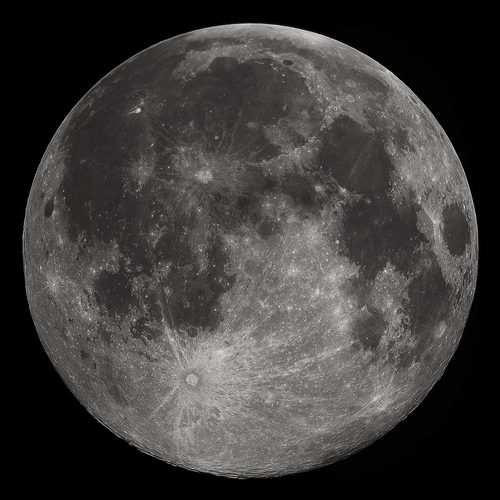
The Moon is always half lit by the Sun. What changes over its 29.5-day cycle of phases is how much of that sunlit half faces us. At new Moon it lies roughly between Earth and the Sun and we see its dark side; it is up in daytime and invisible. A few days later a thin waxing crescent appears in the western sky after sunset. At first quarter the Moon is 90° east of the Sun, half lit, and sets around midnight. At full Moon it is opposite the Sun, rises at sunset and is up all night. After that it wanes, rising later each night, through last quarter back to new.
The four principal phases are instants, the same moment everywhere on Earth; we give them in UTC and, if JavaScript is on, in your own time zone. Illumination is the fraction of the Moon's disc that is lit. In the southern hemisphere the Moon appears upside-down compared with the northern view, so a waxing Moon is lit on the left; our city pages draw it that way.
A supermoon on this site is a full Moon less than 360,000 km from Earth (centre to centre), when it looks up to about 14% wider than at its farthest; a micromoon is a full Moon more than 405,000 km away. Definitions vary between publications.